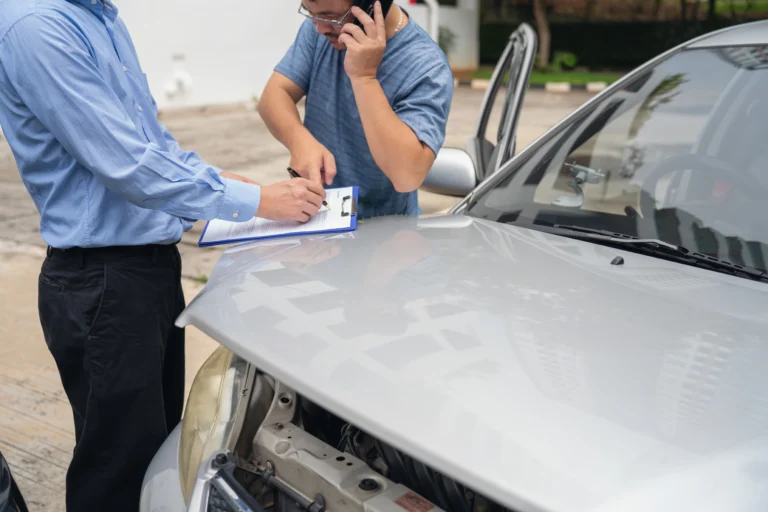
You were not at fault. The other driver ran the light, hit your car, and left you with a sore neck, a wrecked bumper, and a growing pile of medical bills. So you call the at-fault driver’s insurance company to make things right, fully expecting them to pay. Instead you are told to file with your own insurer first. Wait, what? You did nothing wrong, and yet you are the one being sent back to your own policy. If that feels backward, you are not imagining it. Welcome to Florida’s no-fault insurance system, a set of rules that surprises nearly every injured driver who runs into it for the first time.
No-fault shapes almost everything about a Florida personal injury claim, from who pays your first medical bills to whether you can sue the person who hurt you at all. The rules are not intuitive, and the insurance companies are counting on you not knowing them. This article breaks down how the system actually works, where it helps you, where it limits you, and how to keep it from quietly shrinking what you are owed.
What Does No-Fault Insurance Actually Mean in Florida?
No-fault is one of the most misunderstood phrases in Florida law. It does not mean no one is responsible for the crash. It means that, for your initial medical bills and lost wages, you turn to your own insurance first, regardless of who caused the accident.
The system runs on Personal Injury Protection, known as PIP. Florida’s no-fault law, found at Florida Statutes sections 627.730 through 627.7405, requires nearly every registered vehicle owner to carry at least $10,000 in PIP coverage. After a crash you file with your own PIP policy, it pays out, and only later does the question of fault come into play for anything beyond those basic benefits. The original idea was to get money to injured people quickly without waiting for a lawsuit to sort out blame. In practice, that speed comes with strings attached.
What Does PIP Actually Cover, and What Are the Limits?
PIP is helpful, but it is far narrower than most people assume. Under Florida Statute 627.736, your $10,000 in coverage pays the following.
- 80 percent of reasonable and necessary medical expenses, such as emergency care, hospital bills, and rehabilitation.
- 60 percent of lost wages if your injuries keep you from working.
- A $5,000 death benefit payable to surviving family members.
Two things about that coverage catch people off guard. First, the medical and wage benefits come out of the same $10,000 pool, not two separate pots, so the money disappears faster than you would think. Second, PIP only covers 80 percent of your medical bills, which means you are personally responsible for the other 20 percent of every bill until other coverage kicks in. For anything more serious than a minor injury, $10,000 is gone quickly, often after a single emergency room visit and a few follow-ups.
The 14-Day Rule That Quietly Ends Claims
Of all the rules buried in Florida’s no-fault system, this is the one that catches the most people off guard. Under Florida Statute 627.736(1)(a), you must receive initial medical care within 14 days of your accident, or you lose your PIP benefits entirely. Not a reduced amount. All of them.
There are no exceptions for feeling fine at first, for a busy work schedule, or for simply not knowing the rule existed. This becomes a real problem because many injuries, including whiplash and concussions, do not announce themselves right away. The adrenaline of a crash can mask pain for days. People tell themselves they are okay, put off the doctor, and only realize how hurt they are once that 14-day window has closed. By then, the coverage they paid for is gone. The safest move after any crash is to see a doctor the same day or within a few days, even if you think you are fine.
There is a second piece of this rule worth knowing. You only get access to the full $10,000 if a qualified provider documents that you have an emergency medical condition. Without that finding, your benefits are capped at $2,500. The provider you see first, and what they write down, can swing your available coverage by thousands of dollars.
When Can You Step Outside No-Fault and Sue the At-Fault Driver?
Here is where the system limits you the most, and where the biggest money in a serious case lives. PIP pays your basic costs, but it does not cover pain and suffering, emotional distress, or the full scope of your losses. To recover those, you have to step outside the no-fault system and pursue the at-fault driver directly, which Florida allows only when your injuries meet what the law calls the serious injury threshold.
Under Florida Statute 627.737, your injury must fall into at least one of these categories before you can sue for non-economic damages.
- Significant and permanent loss of an important bodily function
- Permanent injury within a reasonable degree of medical probability
- Significant and permanent scarring or disfigurement
- Death
Whether your injury clears this bar is one of the most contested questions in any Florida car accident case, and it rests almost entirely on your medical evidence. A soft-tissue injury that heals in a few weeks usually will not qualify. A herniated disc, nerve damage, a traumatic brain injury, or a permanent impairment usually will. Because the consequences are so large, this is a fight worth taking seriously, and it is one reason the documentation of your treatment matters so much. The way a claim moves from the no-fault layer into a full case against the driver is something our team handles regularly in Florida car accident claims.
How Fault Still Matters Under a No-Fault System
It sounds like a contradiction, but fault matters a great deal the moment your claim moves beyond PIP. Once you are pursuing the at-fault driver, Florida’s comparative negligence rule takes over.
Since House Bill 837 took effect in March 2023, Florida follows a modified comparative negligence standard under Florida Statute 768.81. If you are 50 percent or less at fault, your recovery is reduced by your share of the blame. If you are found more than 50 percent at fault, you recover nothing at all. Say your damages come to $100,000 and a jury assigns you 20 percent of the fault. You collect $80,000. Push your share above 50 percent, and the entire claim disappears. This is precisely why insurers work so hard to pin blame on you, and why an offhand apology at the scene or a careless recorded statement can cost you so much. Knowing the common mistakes that weaken a Florida injury claim helps you avoid handing the insurance company that leverage.
What If the Other Driver Was Uninsured?
Florida’s no-fault rules create a coverage gap that surprises a lot of people. The state requires PIP and property damage coverage, but it does not require most drivers to carry bodily injury liability coverage at all. That means the driver who hurt you may have no insurance to pay for your injuries once your PIP runs out.
This is where uninsured and underinsured motorist coverage, often called UM or UIM, becomes your safety net. If you carry it on your own policy, it can step in when the at-fault driver has no coverage or not enough of it. Given how many Florida drivers carry only the bare minimum, reviewing your own UM and UIM limits is one of the smartest things you can do before you ever need them.
Is Florida’s No-Fault System Going Away?
You may have seen headlines suggesting Florida’s no-fault system was repealed. It was not. Lawmakers have tried for years to end the PIP requirement, and a repeal bill passed the Legislature once in 2021 before the Governor vetoed it. Similar efforts in later sessions, including in 2025 and 2026, stalled or died in committee. As things stand, Florida’s no-fault and PIP rules remain fully in effect, and everything in this article continues to apply to your claim today. If that ever changes, the rules around what you must carry and whom you can sue would shift, so it is worth keeping an eye on.
Key Takeaways
- Florida’s no-fault system means you turn to your own PIP coverage first after a crash, regardless of who caused it, under Florida Statutes 627.730 through 627.7405.
- PIP under Florida Statute 627.736 provides $10,000 that pays 80 percent of medical bills and 60 percent of lost wages from one shared pool, plus a $5,000 death benefit.
- You must receive medical care within 14 days of the crash or lose PIP benefits entirely, and an emergency medical condition finding is required to reach the full $10,000 instead of a $2,500 cap.
- To sue the at-fault driver for pain and suffering, your injury must meet the serious injury threshold under Florida Statute 627.737.
- Once you step outside no-fault, being more than 50 percent at fault bars recovery under Florida Statute 768.81.
- Florida does not require most drivers to carry bodily injury liability coverage, which makes your own uninsured and underinsured motorist coverage important.
- You generally have two years from the crash to file a lawsuit under Florida Statute 95.11(5)(a).
Frequently Asked Questions
Why do I have to use my own insurance when the crash was not my fault? Because Florida is a no-fault state. The system is built so that your own PIP coverage pays your initial medical bills and lost wages regardless of who caused the accident. It is meant to speed up basic payments, though it also limits when you can pursue the other driver. Stepping outside that system to hold the at-fault driver responsible requires meeting the serious injury threshold.
What happens after my $10,000 in PIP runs out? Once PIP is exhausted, your next sources depend on your situation. If your injuries meet the serious injury threshold, you can pursue the at-fault driver’s bodily injury coverage for the rest. Your own health insurance, and your uninsured or underinsured motorist coverage, may also come into play. Mapping out every available layer of coverage early is one of the most valuable things you can do.
Does no-fault mean I cannot sue the driver who hit me? Not at all. It means there is a gate you have to pass through first. If your injuries meet one of the categories in the serious injury threshold, such as a permanent injury, you can sue the at-fault driver for pain and suffering and other damages PIP does not cover. Whether you qualify depends on your specific medical facts.
Do I have PIP if I do not own a car? If you do not own a registered vehicle in Florida, you are generally not required to carry PIP. Your coverage after a crash then depends on other sources, such as a resident relative’s policy, the at-fault driver’s coverage, or your own health insurance. It is a more complicated picture, but it does not mean you are without options.
Is it true that Florida repealed its no-fault law? No. Despite headlines and online claims to the contrary, Florida’s no-fault and PIP system remains in effect. Repeal bills have been introduced repeatedly and have either been vetoed or stalled, so the rules described here still govern your claim. If a repeal ever passes and is signed into law, the requirements would change.
Do I really need a lawyer if PIP just pays automatically? PIP is only the first and smallest layer of a serious claim. The moment your injuries exceed $10,000, or the insurer disputes your treatment, or fault becomes contested, the stakes rise quickly. A lawyer can press your PIP claim, prove the serious injury threshold, deal with the adjusters, and pursue every layer of coverage you are owed.
Get Clear Answers Before No-Fault Costs You
Florida’s no-fault system was sold as a way to help injured drivers, but in practice it is a maze of deadlines and limits that insurance companies know far better than the people it is supposed to protect. One missed window or one misunderstood rule can quietly cut your recovery in half.
At The Injury Claim Law Firm, our Florida car accident attorneys handle the no-fault rules so you do not have to decode them while you are trying to heal. We press your PIP claim, build the medical proof that meets the serious injury threshold, identify every layer of coverage, and fight the insurers who would rather you stay confused. With over 100 years of combined experience and millions recovered for injured Floridians, we know how this system works and how to make it work for you. Your consultation is free, and you pay nothing unless we win.
Reach out today, while the deadlines are still on your side and every option is still open.